Mickiemcfist wrote: » A better figure to use would be median rather than average, I feel the median would be lower than 50k
Geuze wrote: » Yes, median earnings around 40-42k. CSO don't publish median, so that data is from Eurostat SES.
Andrew Beef wrote: » No they didn’t. I’ve more news for you; it’s never the cream who leaves.
Andrew Beef wrote: » We become like every other major city in the world where those people live elsewhere and commute. The idea that a waitress/nurse/security guard can live 20 mins from the city centre is a dead duck. They will need to live in Mullingar.
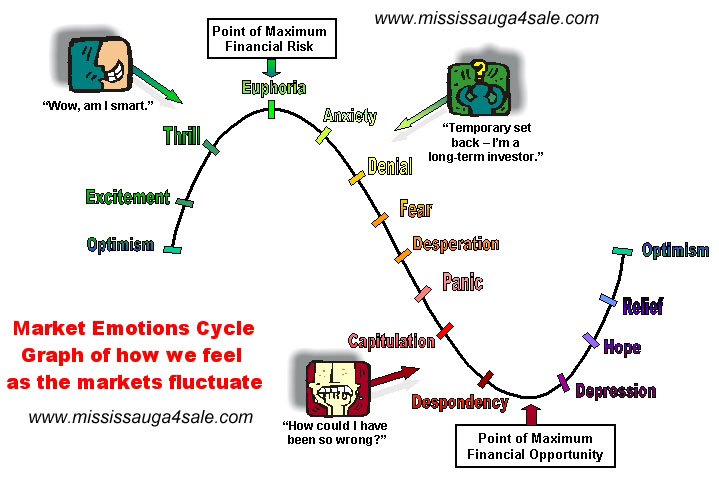
Andrew Beef wrote: » All I see are people ranting “there’s gonna be a crash!” without any basis for thinking it.
mortimer33 wrote: » Well Ireland is a small open economy that has a large young mobile workforce. Dublin in particular has a huge number of non-Irish living/working. if the economy suffers due to any number of external factors they won't be staying for the weather.
Andrew Beef wrote: » a €50k a year is a modest salary.
dr.fuzzenstein wrote: » The companies hiring them love this, because a desperate workforce is one that doesn't have stupid ideas above their station. And the multi national firms buying up property left right and center get to squeeze them from the other side. That way you can calculate their existence down to the last penny.
Skedaddle wrote: » There are few if any cities of Dublin's size (around 1 million) where a 72.9km commute would be considered normal. That's how far Mullingar is. It's the 39th largest metropolitan area in the EU up there with Lille, Helsinki, Glasgow and Antwerp. Incidentally, most cities of that scale on the continent have very good public transportation, some even have full metros. The way that people talk on some of these threads you'd think it was reasonable to compare Dublin with megacities like London, Paris, New York etc. It's a pretty small city with totally inadequate housing stock to meet an economic boom. This is driven by a dysfunctional banking system that's not healthy enough to fund development, developers who are still not over the 2008 crash and a planning system that's created endless problems over the decades. We are still basically nursing debts from the last crash which is in large part why the supply hasn't been on stream and is being slow to come back. Also the housing stock is totally inappropriate to meet the demand. We have a situation where there are very few apartments suitable for single people in particular which results in thousands of young professionals having to share accomodation in family homes. That's pushing those of reach of families while still providing poor accommodation. If you think about it, instead of a host accomodating a family, in a lot of cases in Dublin it's accomodating maybe 4 or even 6 ( might be two couples and two singles) adults on good incomes. It's actually fairly unusual (and very unattractive) to have to house share beyond student days, but it's the norm in Dublin. It means not having your own bathrooms, cooking facilities and having limited privacy. I think a lot of the properties in Dublin are only meeting the insane rents by people sharing. I've never seen anywhere with such an amount of doubling and tripling up. It's one reason I know quite a few Continental professionals in IT who've packed up after a year and gone to Berlin and elsewhere. Dublin (and even Cork) has very inadequate accommodation. If you look at cities like Brussels and Antwerp, a couple or even a single person on a reasonable income can expect to be able to live on their own in a pretty nice apartment, within the city and suburbs (not 79km away) and not be at the pin of their collar. You're not going to be able to afford a mansion, but you'll have your pick of nice, comfortable, reasonably-sized apartments in most suburban areas as will have a good quality of life. You'll also find plenty of long lease options and unfurnished apartments that you can make your home. They're not full of landlord furniture and cheap appliances someone found while dumpster diving or in some ultra cheap shop that does landlord specials. People actually start building up their own furnishings in their 20s as they move onwards and upwards they just bring them with them. That's not an unreasonable or unusual expectation. It's also a big part of what defines quality of life. Failure to address this issue or pretending that it's a normal state of affairs is a major part of why Dublin doesn't rank well as a livable city. What's the point of working hard if it's just running on a hamster wheel to live in what amounts to a hovel? Or commuting 79km to a small city? It makes no sense and it's what's going to limit Dublin and Ireland's growth potential. I find the Irish market is really creating a very odd mess of sharing and nearly locking people into student like living standards for way too long. I know single professionals with good jobs in Dublin still sharing in their late 30s and even 40s. They've no a prospects of any better as their industries don't pay the wage levels that will afford more. Also in Ireland if you're not married or living with your partner, it's a complete nightmare to find decent housing in the cities as a single adult. Unless you're on a very good income, you really might as well emigrate. There's very, very little in the way of suitable housing. Most of the French people I know who move here for IT jobs see Ireland as a place to break into an industry, then leave. That's because of three factors: 1. Housing. 2. Health - mostly anyone I know who has experienced the HSE via the A&E system or has had a serious medical issue and has had to a wait months just re-evaluates remaining here and goes back to France or Germany etc. I know a lot of continental Europeans and there really is horror at the state or the Irish health system. It's barely developed world standards in terms of access to services, yet it's very well funded. Again: bad planning/management just like housing. It operates as one endless crisis with everyone running around in circles chasing their tails. How the hell we have created this mess is beyond me. It's literally unbelievably bad. 3. Pensions. A lot of people I've spoken to see Ireland and also Britian as places to start a career but not places to continue it or retire in. There are concerns about pension provision, regulation of funds, poor state services etc. That's not good for our economy as we're only getting people to stay for a few years at most. Fix those 3 and you've one of the world's best places to live. Don't fix them and you will always be second tier.
Skedaddle wrote: » The two issue I keep hearing are : 1. Housing (All of the above) Or 2. An encounter with an Irish A&E due to an illness or accident. I know one French person and two Germans who quit jobs and packed up and went home after bad experiences with healthcare here - all involving excruciatingly long waits in A&E or poor quality of access to treatment. They quite literally didn't feel safe I also know a French person who has flown home to go to the doctor, with quite serious symptoms. They're the two factors making Ireland seem very unattractive. Also yeah, that's absolutely experience comparing Brussels and Antwerp and also mid sized French cities with Dublin and also Cork! High end houses in Brussels and Antwerp are similarly priced to Dublin, but there's a vast array of affordable housing like really pleasant 1 and 2 bedroom large apartments and even beautiful historical apartments if you're willing to look around a bit, for about half what you'd pay for a total hovel in Dublin. It's a completely unrealistic market and I think it's being normalised as acceptable, possibly based on comparison to London or something.Varadkar and Co simply aren't doing enough. It's a broken system. It also is a pyramid. The lack of suitable apartments is pushing demand into an area should be modest family homes. So that's pushing low income families into homelessness or very very unrealistic commutes as they're competing with 4, 5 and 6 young professionals on good money for a family home. It's that revenue that's driving the speculative investors who are squeezing out low and middle income families. If it grinds on and on, it will eventually have a political impact and that's when Ireland's Trump or Brexit moment of public anger will come. It may not be a right wing stupidly targeted snap, but it will be a snapback. Of that I'm sure! I would also stress that if you push people out of the cities too far they risk unemployment and underemployment due to inability to reach a range of jobs. That's really, really had for the economy too. So the idea that you can just decant Dublin into Athlone makes no sense either.Also you can't just assume this is normal and keep propping up speculators with stupid policies.
johnp001 wrote: » Or it's broken due to all the stupid policies because successive governments have done too much rather than too little. Without all the intervention it could never have got this broken. Belief that just a few more policies will finally fix it is the triumph of hope over experience
Skedaddle wrote: » It's been both. The interventions they have made are usually useless or counterproductive, yet they're not intervening in where they should be - like shaking out held up landbanks and derelict properties in Dublin. The biggest intervention they could make is properly planning and developing areas in a sane way around good public transit networks. They're doing none of that. It's all reactionary retrofitting of public transit 40 years after the houses are built. A lot of the conservation interventions are also absolutely stupid. They should preserve historic buildings and significant areas but a lot of what I see is just people trying to claim that some ugly, utilitarian 19th century building is worth protecting, or that somehow all tall buildings are bad. You'd solve Dublin's housing crisis with a lot of attarctibe, mid-height development (6 floors) in fill and some high quality, signature piece towers in designated areas. Maybe Dublin should be looking at actually designing a 21st century skyline, not trying to preserve this imagined skyline that it doesn't have. It's a flat, largely featureless city with a few historic areas and a lot of bland Victorian and early 20th century stuff that's of little relevance. You can also work with existing buildings to enhance areas with new development. At times here I think it's like we are seeing a living city as a museum that should be frozen in time. You could also enhance and repopulate areas of the city centre that are very dead and run down at present. Also I would strongly suggest that it would make sense to become a lot more aggressive about taxing derelict sites in the city. Nothing should be incentivising people to sit on those. They are urgently needed. Also getting inappropriately used sites cleared - surface car parks, warehousing, low rise bad quality buildings etc etc. There are plenty of those sitting around. The other big one might be longer term but move Dublin port. There's absolutely no logic in having a huge port facility sitiing in the middle of a 21st century city. Even Cork is 30 years ahead of Dublin on this and is moving it's docklands to an ultra modern port Ringaskiddy and opening a huge, prime area for high-rise redevelopment. I just think sometimes Dublin has no vision. I'm hoping this move towards executive mayors in Dublin and Cork helps and isn't just kicked down the road indefinitely. Our local authority system doesn't work very well.
vikas.kshatriya wrote: » Can someone please elaborate how "Brexit" will cause property crash as mentioned earlier in some of the posts. To me its other way round. Immediately after the Brexit results, there was sudden increase in the population, lot of people came back,resulting in rental and buying capacity increase. This can be verified as Irish passport office hired 80+ staff at the time. As a result, rental is now practically impossible and buying increased by 100,000 at-least compared to before (lot of supporting examples in South Dublin)
Skedaddle wrote: » It's been both. The interventions they have made are usually useless or counterproductive, yet they're not intervening in where they should be - like shaking out held up landbanks and derelict properties in Dublin. The biggest intervention they could make is properly planning and developing areas in a sane way around good public transit networks. They're doing none of that. It's all reactionary retrofitting of public transit 40 years after the houses are built. Look at what public transit has gone in: they electrified an existing 19th century heavy rail line, put a tram on an abandoned Victorian suburban rail line (green line) and ran a single tram lines to Tallaght and spent the last 30 years patting themselves on the back?!? A lot of the conservation interventions are also absolutely stupid. They should preserve historic buildings and significant areas but a lot of what I see is just people trying to claim that some ugly, utilitarian 19th century building is worth protecting, or that somehow all tall buildings are bad. You'd solve Dublin's housing crisis with a lot of attarctibe, mid-height development (6 floors) in fill and some high quality, signature piece towers in designated areas. Maybe Dublin should be looking at actually designing a 21st century skyline, not trying to preserve this imagined skyline that it doesn't have. It's a flat, largely featureless city with a few historic areas and a lot of bland Victorian and early 20th century stuff that's of little relevance. You can also work with existing buildings to enhance areas with new development. At times here I think it's like we are seeing a living city as a museum that should be frozen in time. You could also enhance and repopulate areas of the city centre that are very dead and run down at present. Also I would strongly suggest that it would make sense to become a lot more aggressive about taxing derelict sites in the city. Nothing should be incentivising people to sit on those. They are urgently needed. Also getting inappropriately used sites cleared - surface car parks, warehousing, low rise bad quality buildings etc etc. There are plenty of those sitting around. The other big one might be longer term but move Dublin port. There's absolutely no logic in having a huge port facility sitiing in the middle of a 21st century city. Even Cork is 30 years ahead of Dublin on this and is moving it's docklands to an ultra modern port Ringaskiddy and opening a huge, prime area for high-rise redevelopment. I just think sometimes Dublin has no vision. I'm hoping this move towards executive mayors in Dublin and Cork helps and isn't just kicked down the road indefinitely. Our local authority system doesn't work very well.
Mickiemcfist wrote: » Good points but Cork is much better served geographically to have different ports. Dublin has one opening to the ocean (Liffey) and that's where the port is. There isn't much scope to put it anywhere else.
Andrew Beef wrote: » My sense is that there are people who are wishing for a crash, and that they fall under two main categories; those who have remained on the sidelines and missed out and those who perceive that they will never be able to afford their own place.
Mickiemcfist wrote: » vikas.kshatriya wrote: » Can someone please elaborate how "Brexit" will cause property crash as mentioned earlier in some of the posts. To me its other way round. Immediately after the Brexit results, there was sudden increase in the population, lot of people came back,resulting in rental and buying capacity increase. This can be verified as Irish passport office hired 80+ staff at the time. As a result, rental is now practically impossible and buying increased by 100,000 at-least compared to before (lot of supporting examples in South Dublin) If a hard brexit happens with no well established trade deal, we'll lose our biggest trading partner, exports will drop & businesses here will suffer & lay off staff/cut salaries etc.
Arthur Daley wrote: There were a few of these people back in 2002-2007 also. They were dismissed as loonies by many. They were on the right side of history. Some held out and snapped up property with little debt in 2011/2012.