Gaoth Laidir wrote: » Yet you are there with links to other papers and YouTube videos that support your theory when it suits you. You have selective aptitude, it seems.
1947 was the record 60 years ago. It was almost half a degree warmer than pre industrial levels. On an underlying warming trend it's no surprise that recent years will be warmer again.
Last month we finally received some good news from PIOMAS, and the good news continues this month. With 2017 losing a below average amount of sea ice volume during June (compared to the average of the last 10 years), and a couple of years losing a great deal of volume, such as 2010, 2011 and of course, record smasher 2012, the gap has effectively been closed. At the end of May the difference between 2012 and 2017 was 1481 km3 (a month earlier it was 2412 km3 even), and now it's just 131 km3.
Akrasia wrote: » Most of the people who argue that we need to tackle climate change are not anti modern technology, in fact, it's the opposite, we are anti 18th century technology. Burning fossil fuels is an obsolete technology, we need to move towards renewable energy, and we will eventually, but the climate crisis means we can't wait until the 'free market' does it on it's own, we need governments to do two things.
Akrasia wrote: » 1. Stop propping up coal oil and gas industries with huge subsidies and tax breaks that the OECD estimate amount to about $180Bn a yearhttp://www.oecd.org/environment/support-to-fossil-fuels-remains-high-and-the-time-is-ripe-for-change.htm
Akrasia wrote: » 2. Start government funded investment programs to fund the rapid transition to clean technology, grants for households to move to renewable energy to power and heat their homes and transport.
Akrasia wrote: » 3. Regulations that make it prohibitively expensive for polluting industries to operate, and tax breaks for them to find technological solutions that allow them to operate with much lower environmental impact.
Akrasia wrote: » Which part of these is 'anti humanist'?
Pa ElGrande wrote: » All of them. Note the first line "Humanism is a philosophical and ethical stance that emphasizes the value and agency of human beings, individually and collectively, and generally prefers critical thinking and evidence (rationalism and empiricism) over acceptance of dogma or superstition."
Akrasia wrote: » It's a polemic that makes a lot of generalisations. Anti GMO activists are nothing to do with climate change activists. Most of the people who argue that we need to tackle climate change are not anti modern technology, in fact, it's the opposite, we are anti 18th century technology. Burning fossil fuels is an obsolete technology, we need to move towards renewable energy, and we will eventually, but the climate crisis means we can't wait until the 'free market' does it on it's own, we need governments to do two things. 1. Stop propping up coal oil and gas industries with huge subsidies and tax breaks that the OECD estimate amount to about $180Bn a yearhttp://www.oecd.org/environment/support-to-fossil-fuels-remains-high-and-the-time-is-ripe-for-change.htm 2. Start government funded investment programs to fund the rapid transition to clean technology, grants for households to move to renewable energy to power and heat their homes and transport. 3. Regulations that make it prohibitively expensive for polluting industries to operate, and tax breaks for them to find technological solutions that allow them to operate with much lower environmental impact. Which part of these is 'anti humanist'?
Akrasia wrote: » It is a force multiplier. It is a huge problem on it's own, but it also makes almost every other pre-existing problem worse.
Oneiric 3 wrote: » These 'generalisations' are more than valid though. Are fossil fuels really as 'obsolete' as you make out? because If so called 'renewable energy' was in anyway effective, it would have taken over from more traditional forms of energy by now.
Oneiric 3 wrote: » You'll have to explain this a bit more, because on the face of it, you are suggesting that current world problems are worse than they would because of climate change. This is a very flippant comment. Perhaps you would even go so far as to suggest that if climate change was a big factor back in the mid-1930s, we would have seen an even bigger percentage of the world's population being slaughtered in the years afterwards? We all know that climate change in itself is a problem that we need to sort out, but to claim that it is the 'biggest threat to our species in recorded history' is as naive as it is untrue, and really just validates the very point that O'Neill was making about climate change being a substitute religion for those who don't hold one.
http://newsroom.unfccc.int/unfccc-newsroom/climate-change-poses-increasing-risks-to-global-stability/ 1. Local resource competition Competition for access to essential natural resources such as water and arable land, which will be constrained in some regions due to climate change, can lead to instability and even violent conflict. Particularly regions dependent on a narrow resource base, with a history of conflict, or home to marginalized groups are likely to have disruptive competition for resources. 2. Livelihood insecurity and migration The increased insecurity of people who rely on natural resources for their livelihood is likely to induce climate related migration. Climate change will reduce grazing land, dry up water sources, and threaten jobs connected to climate-sensitive economic sectors, which could also push people to turn to illegal sources of income. 3. Extreme weather events and disasters Climate change is increasing the frequency and intensity of extreme weather events such as heatwaves, flooding, droughts and storms. Extreme weather events and disasters will exacerbate fragility challenges and can increase people’s vulnerability and grievances, especially in conflict-affected situations. 4. Volatile food prices and provision The impacts of climate change are expected to decrease yields and disrupt food production in many areas, increasing prices of food and market volatility. As a result, risks of public unrest, democratic breakdown and civil and local conflict will likely be heightened, particularly in poorer regions. 5. Transboundary water management Competition over water use is likely to increase the pressure on governance structure where the management of water supplies is shared. Several transboundary water basins are located in regions with a history of armed conflict and significant interstate tensions. 6. Sea-level rise and coastal degradation Rising sea levels are threats to the economic and physical viability of low-lying areas, as land and coastal resources are gradually lost. This can lead to social disruption, displacement and migration, as well as disagreements over maritime boundaries and ocean resources. 7. Unintended effects of climate policies Unintended consequences from climate adaptation and mitigation policies may occur if they are implemented without enough cross-sectoral coordination or due to the lack of conflict-sensitive implementation. Possible unintended consequences include increased insecurity of land tenure, marginalization of minority groups, increased environmental degradation and loss of biodiversity.
Akrasia wrote: » There is nothing dogmatic about climate science. A true rational skeptic would identify it correctly, as the greatest challenge facing our species in recorded history. It is a force multiplier. It is a huge problem on it's own, but it also makes almost every other pre-existing problem worse.
Akrasia wrote: » It is widely accepted that the syrian conflict was at the very least exacerbated due to the drought and food shortages that displaced many people brought people onto the streets demanding action.https://www.nytimes.com/2015/03/03/science/earth/study-links-syria-conflict-to-drought-caused-by-climate-change.html
Pa ElGrande wrote: » Because science. Your use of the term climate science is just an appeal to authority and it is clear from the hyperbole you generated throughout this thread that you lack sufficient grasp of the scientific disciplines or research involved in studying a complex system like climate. Yet that does not stop you preaching absolute certainty where it does not exist.
Oneiric 3 wrote: » And a counter argument to this claim:http://www.telegraph.co.uk/comment/12022872/Drought-did-not-cause-the-Syria-terror-crisis.html
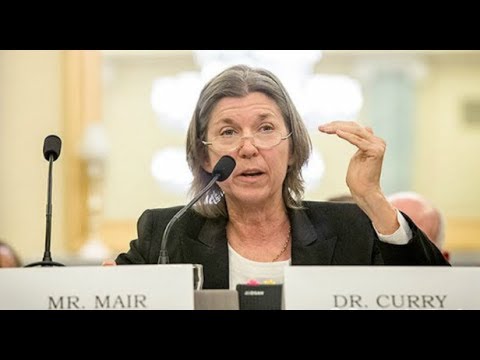
Judith A. Curry is an American climatologist and former chair of the School of Earth and Atmospheric Sciences at the Georgia Institute of Technology. Her research interests include hurricanes, remote sensing, atmospheric modeling, polar climates, air-sea interactions, and the use of unmanned aerial vehicles for atmospheric research. She is a member of the National Research Council's Climate Research Committee. As of 2017, she has retired from academia.Curry is the co-author of Thermodynamics of Atmospheres and Oceans (1999), and co-editor of Encyclopedia of Atmospheric Sciences (2002), as well as over 140 scientific papers. Among her awards is the Henry G. Houghton Research Award from the American Meteorological Society in 1992. Regarding climate change, she thinks that the IPCC reports typically neglect what she calls the "Uncertainty Monster" in projecting future climate trends, which she calls a "wicked problem." Curry also hosts a popular science blog in which she writes on topics related to climate science and the science-policy interface.
https://www.youtube.com/watch?v=Zw470ury2kw One incorrect observation by a scientist in 1879, snowballed into 150 years of consensus mass delusion.
Gaoth Laidir wrote: » Jesus wept. So 2010 was the only time there was a drought in Syria. There must not have been droughts prior to this because this crisis didn't happen before then. Where's the evidence that the 2010 drought - in an arid area of the world, I might add - was caused by climate change?
There is evidence that the 2007−2010 drought contributed to the conflict in Syria. It was the worst drought in the instrumental record, causing widespread crop failure and a mass migration of farming families to urban centers. Century-long observed trends in precipitation, temperature, and sea-level pressure, supported by climate model results, strongly suggest that anthropogenic forcing has increased the probability of severe and persistent droughts in this region, and made the occurrence of a 3-year drought as severe as that of 2007−2010 2 to 3 times more likely than by natural variability alone. We conclude that human influences on the climate system are implicated in the current Syrian conflict.
dense wrote: » Till someone can explain how CO2, which makes up around just one tenth of one per cent of the earths atmosphere can be affecting anything, I'll call the whole thing a scam.
That's even before we try to drill down to differentiate what miniscule fraction of that 10% of 1% of CO2 is man made and what is from nature, and how one portion is good and the other detrimental. Dig deep. This 97% of scientists baloney is as reliable as the 9 out of 10 cats preferring something that smells meatier.
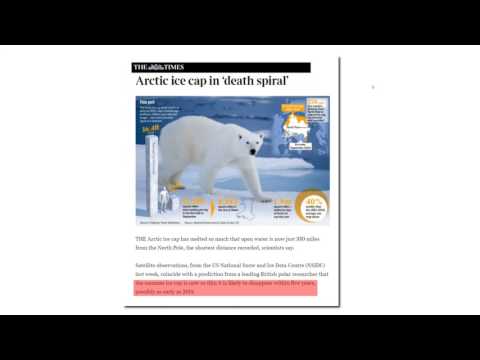
Pa ElGrande wrote: » https://www.youtube.com/watch?v=7zk7Xfyv6k4 and back on topic to the Arctic and the failed predictions to date of scientists. https://www.youtube.com/watch?v=R00G48OAuMM
Gaoth Laidir wrote: » Latest arctic extent is showing some temporary levelling off of late, now well above the low of 2012. With about 3 weeks of the melt season left, it's unlikely to go below that of 2016 or 2015.
Akrasia wrote: » I don't appreciate the dismissive 'jesus wept' comment.
Originally Posted by Akrasia It is widely accepted that the syrian conflict was at the very least exacerbated due to the drought and food shortages that displaced many people brought people onto the streets demanding action.https://www.nytimes.com/2015/03/03/s...te-change.html
The 2007 - 2010 drought was the worst drought on the instrumental record. It was also 2-3 times more likely to have occured due to climate change according this paperhttp://www.pnas.org/content/112/11/3241.abstract And my whole point was that these droughts and other extreme weather, which are going to be made worse by global warming, make bad circumstances worse, they are not the sole cause of political uprisings, but mass displacement of people due to drought and heatwaves is only going to further destabilise a region and make civil conflict worse. Your 'jesus wept' comment made it look like I am being unreasonable. Can you please tell me how droughts and heatwaves made worse or more frequent can have any effect other than to destabilise fragile societies?
Gaoth Laidir wrote: » It was in relation to this (underlined bits) I asked where is the proof that this drought was definitely caused by agw. That paper does not address this question, it speaks of increased probability. You speak of it being "at the very least exacerbating" the conflict. So what's your "very most" scenario?
The image below shows this drought viewed in parallel with a fivefold increase in population. Add to that an irrigation system that has for a long time been profoundly unfit for purpose to meet that increased demand, and that in itself is a serious situation. In other words, had this drought occured a few decades ago, or with a proper irrigation system, then the effects would have been greatly reduced. A crisis was waiting to happen sooner or later with that increase in population fully depending on that system, even with no reduction in rainfall. Note also the lack of any trend during the early-century warming of the 1900s, which, according to you, was also significantly enhanced by anthro ghgs. Where's the signal there? No trend from 1900 right up to 20 years ago.