Realt Dearg Sec wrote: » I've read this ten times and I still don't know what you mean. Reverse what?
Deleted User wrote: » The shortest timespan that has been theorised to have any physical meaning is the Planck time of approximately 5.39 x 10^-44 seconds. The age of the universe is estimated to be approximately 4.3 x 10^17 seconds. This means there are approximately 7.977 x 10^60 orders of magnitude between the smallest timescale and the largest timescale, since the universe began its post-big-bang existence. The mid-way point in orders of magnitude between these two scales is 2.82 x 10^30 orders of magnitude. This means that one planck time is to 152 femtoseconds (1.52 x 10^-13 seconds) as 152 femtoseconds is to the age of the universe since the big bang. A femtosecond is a timespan equivilant to a millionth of a nanosecond, or a trillionth of a millisecond. 152 femtoseconds is around as long as it takes one chemical reaction to occur, typically involving the movement of electrons in the forming and breaking of a chemical bond/s between atoms. So if we, at our large, slow human scales were to think of the age of the universe in units of time as short as those at which chemical reactions take place, in reality those units can be subdivided again into as many units as we have initialled divided the age of the universe! But once you reach that point, time can be subdivided no further while still being a useful description of objective reality. It's units eventually becomes discreet.
EndaHonesty wrote: »
everlast75 wrote: » Can someone point out why Endahonesty got more thanks than Onionbelt. Clearly I am missing something here
New Home wrote: » People like puns - deal with it. :cool:
Deleted User wrote: » This means that one planck time is to 152 femtoseconds (1.52 x 10^-13 seconds) as 152 femtoseconds is to the age of the universe since the big bang.
New Home wrote: » Wait... is Onionbelt a pun on Orion's Belt?? :eek: Wow... :pac:
Peregrine wrote: » It was just the style at the time, NH.
islandlady wrote: » Many people know that the Great Blasket Island was visited by various scholars who encouraged the residents to write and record their lives, and it was their encouragement that led to the classic works of Tomás Ó Criomhthain, Peig Sayers and Muiris Ó Súilleabháin among others. One of the scholars who visited was George Thomson (very close friend of Muiris) who was a Greek scholar from London. He was also a leading Marxist scholar and respected philosopher. Toward the end of his life, he credited his understanding of these highly academic subjects to the time he spent with the Blasket people. He commented on how the island residents were engaged in a form of primitive communism. There was no division of goods based on a top down hierarchy - it was community of mutual support and sharing and is evident from the clachan structure of the village to the ancient farming system used by the islanders. He also attributed his pioneering work on Homer as coming from his understanding of the oral traditions and folk tales of the islanders. Perhaps not the most exciting fact but I always find it fascinating that such a small community could inspire so much in both each other and themselves.
begbysback wrote: » Onionbelt copied/pasted - endahonesty obviously put more effort in searching for the appropriate picture
Deleted User wrote: » begbysback wrote: » Onionbelt copied/pasted - endahonesty obviously put more effort in searching for the appropriate picture I found the relevant figures by googling but I did the calculations myself. Harder than you might think.
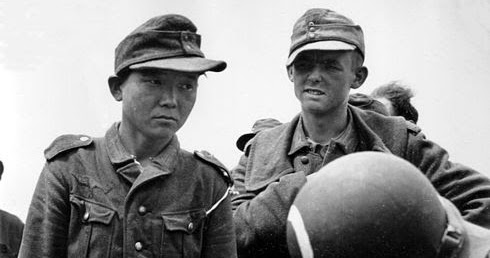
New Home wrote: » What a life, poor man. It's like that chap from Nagasaki who went to Hiroshima and was there when the atomic bomb was dropped; he survived it, and went back home in time for the second bomb, which he also survived.


![Photo of [Deleted User]](https://w5.vanillicon.com/v2/5d64887c9bc6ef1c014eb33422ffcd89.svg)





![Photo of [Deleted User]](https://wb.vanillicon.com/v2/bb1b435feca4d036f6db42bb67252c40.svg)