wakka12 wrote: » That is not the passport office. That is another redevelopment going on across the street from it.http://www.irishtimes.com/polopoly_fs/1.2875721.1479660537!/image/image.jpg_gen/derivatives/box_620_330/image.jpg This is how the passport office will look when done
Dr Crayfish wrote: » I think you've got that wrong! Wasn't the PP office on the North side of the street? The one across the road was some EU building, and then it became a temporary PP office for a little while when they demolished the original one. I used to do some work in the PP office, so I'm pretty sure about this :pac: Where is the PP office now though?
Dr Crayfish wrote: » Jesus, those pics sugarman posted. How the hell did a capital city let an area get that decrepit? It looks like Dresden in 1945 ffs. Were we really that poor? It's right by Grafton St and St Stephen's green and a stonesthrow from Government buildings!
andekwarhola wrote: » The Berkeley in Trinity is pretty cool. Always liked it.
Senor Fancy Pants wrote: » Is thart Art Deco or Art Nouveau?
dublinman1990 wrote: » The RTE HQ in Donnybrook strike to me as having no aesthetic quality to them now for many years.
appledrop wrote: » They are all horrifc I absolutely despise them including Busaras. The place is so depressing + ugly.
Yamanoto wrote: » It's actually quite depressing that mistakes like this are still being made along the main thoroughfares of Dublin city centre.
Yourself isit wrote: » That's alright. Dame St isn't that aesthetic at that end anyway.
Yourself isit wrote: » It wasn't just Dublin. During the 60's and 70's the most complete Georgian city in Europe - Bath -was under threat from brutalist and "modern" redevelopment. It was a time when there was a contempt for the 19C in general and a fetishing of the car. It's hard to believe that the descendents of the people who built they city wanted its destruction. No post imperial reason there.
Capt'n Midnight wrote: » Easy way to remember - *dwarves* are art deco; elves are art nouveau
wakka12 wrote: » And it wasnt just the UK and it wasnt just europe it was the whole world. Theres very few extremely old buildings in the world, humans have strived for whatever was considered modern ,throughout history. People in the 17th and 18th centuries went about redevloping medieval cities and widening streets for instance. and even today the exact same pattern is repeating, we are ridding our cities of most buildings built post ww2 as we don't consider them modern, aesthetic or fit for purpose despite the preceding generations before us thinking other wise. And I can guarantee you that the next generations after us will hate most of the buildings we built during our lifetimes and some other style will be considered the right one
Yamanoto wrote: » Aside from protected structures like City Hall & Newcomen Bank a few steps away, the ornate canopy of the Olympia Theatre directly opposite & the 1877 built AIB building right beside it, you could be right.
Yourself isit wrote: » What would you have there? Pastiche? There's no architectural consistency there.
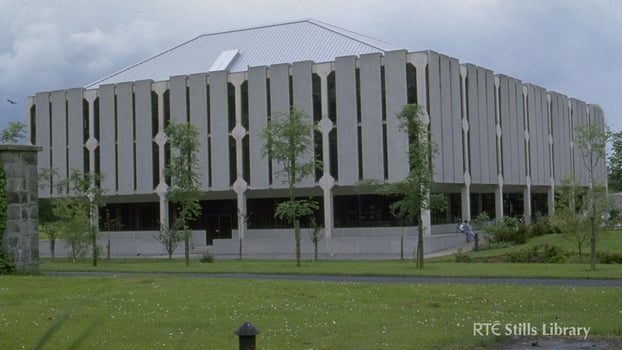
Zaph wrote: » That is the single most inappropriately located building in the city. You have a courtyard full of fine old buildings with this monstrosity made up of slabs of concrete where you can see (presumably intentionally, for some bizarre reason) the joins and it has those weird distorted curved windows. I still don't understand how they even got planning permission for it. It might be OK-ish in some more modern development, but Trinity most definitely isn't the place for it.
threetrees wrote: » Where is this? Looks really familiar but I can't place it. Somewhere west of Grand Canal basin?
JupiterKid wrote: » Shannon House, Limerick, built 1972.
Yourself isit wrote: » They can (and should) get rid of the worst of the new stuff. Just as we are getting rid of Hawkins house.Sometimes though there's no reason to replace the past. Central Paris should look like it does now in 1,000 years, I hope. Catastrophe apart.
Marcusm wrote: » This is quite amusing if you consider that, apart from certain landmark buildings, Haussman started the relaying of Parisian streets and a complete rebuilding of its buildings in the 1850s, ie it's not that old and is the product of one of the largest building clearance projects the world has ever seen. Unlike the aftermath o the Great Fire of London whereafter the original street layouts were preserved, medieval Paris was cleared and a new 19th century Paris was built.
Marcusm wrote: » I imagine that a lot of the support will have come from the attraction of juxtaposing an entirely modern, rough hewn and frill free building against the antecedent styles.