Stigura wrote: » Ye had to have been there, man .....
JupiterKid wrote: » Ironicially, some of these 60s and 70s offices are now themselves getting knocked down for newer generation offices, but will they be any better? What do you think of all the modern offices and apts. jolt in the Docklands, for instance?
Dr Crayfish wrote: » Yes Molesworth St is being rebuilt now, the horrible old passport office and the one across the road from it. Whatever they put in place has to be better than what was there, at least.
Deleted User wrote: » I know it's 50s, but Busáras should be preserved as architectural heritage and perhaps our standout effort at modernism, even if it might be considered ugly. But some of the ones you mention don't have any real merit IMHO and could be torn down.
[Deleted User] wrote: » I know it's 50s, but Busáras should be preserved as architectural heritage and perhaps our standout effort at modernism, even if it might be considered ugly. But some of the ones you mention don't have any real merit IMHO and could be torn down.
JupiterKid wrote: » I'm taking this from a few posts I did in another thread - namely the destruction of much of Dublin, and to a lesser extent, our provincial cities' historic cores for what I consider to be abominations of buildings built in the name of "progress". Aside from the failed Ballymun high rise scheme (1966-69) that was hearalded as part of the "vision for modern.Ireland" - as early as 1974 the scheme was rated as a failure - there were the architecturally inarticulate concrete and glass office blocks that were thrown up in Dublin 2 and Dublin 4 in the 1960s and 1970s. Buildings like the currently occupied Apollo House (1969), the despicable Hawkins House (1963) around the corner, nearby Liberty Hall (1965), the Setanta Centre (1975) and so many others. Some were okish - the ones clad in red brick have fared better - but most were pure sh*t. They replaced beautiful historic Georgian houses that were wantonly demolished. At the time, the attitude was " ah sure they were built by the Brit aristocrats, get rid of them" and few stood against this orgy of destruction until the mid 1970s. By then, it was already too late really. Now don't get me wrong, some modern buildings had merit, like the Bank of Ireland complex on Baggot Street (1972) or the controversial Central Bank (1978) but look at Wood Quay beside Christchurch for instance - an archaeological site of massive importance concreted over for the really vile bunkers of the Civic Offices (1985). The destruction continued well into the 1980s, historic buildings being razed to the ground to make way for the Stephens Green Centre (1988) and so much of North inner city Dublin didn't even get to see anything replacing the knocked Georgian houses - just derelict sites. Places like Parnell Street and North King Street were like bombed out wastelands until the 1990s urban renewal apartment boom. What do you make of this destruction? Was it necessary or could a better way have been found? Paris and Amsterdam for instance, preserved their historic urban cores and placed their new office towers at the edge of the inner city. La Defense is a good example of this in Paris. London, on the other hand, knocked down beautiful Georgian and Victorian buildings for office blocks - all in the name of 1960s so-called "progress." Ironicially, some of these 60s and 70s offices are now themselves getting knocked down for newer generation offices, but will they be any better? What do you think of all the modern offices and apts built in the Docklands, for instance?
andekwarhola wrote: » I kinda have an affection for brutalist architecture although I think it's rooted in generational nostalgia and context (70s/80s urban working class). The thing I just don't really like is when it's badly juxtaposed with older architecture, like a lot of Georgian Dublin.
andekwarhola wrote: » The newer ones on Lower George's Street are also a bit of an eyesore against the older buildings. Then again, you have brutalist stuff like the Central Bank which is an interesting/striking contrast.
Senor Fancy Pants wrote: » Is thart Art Deco or Art Nouveau?
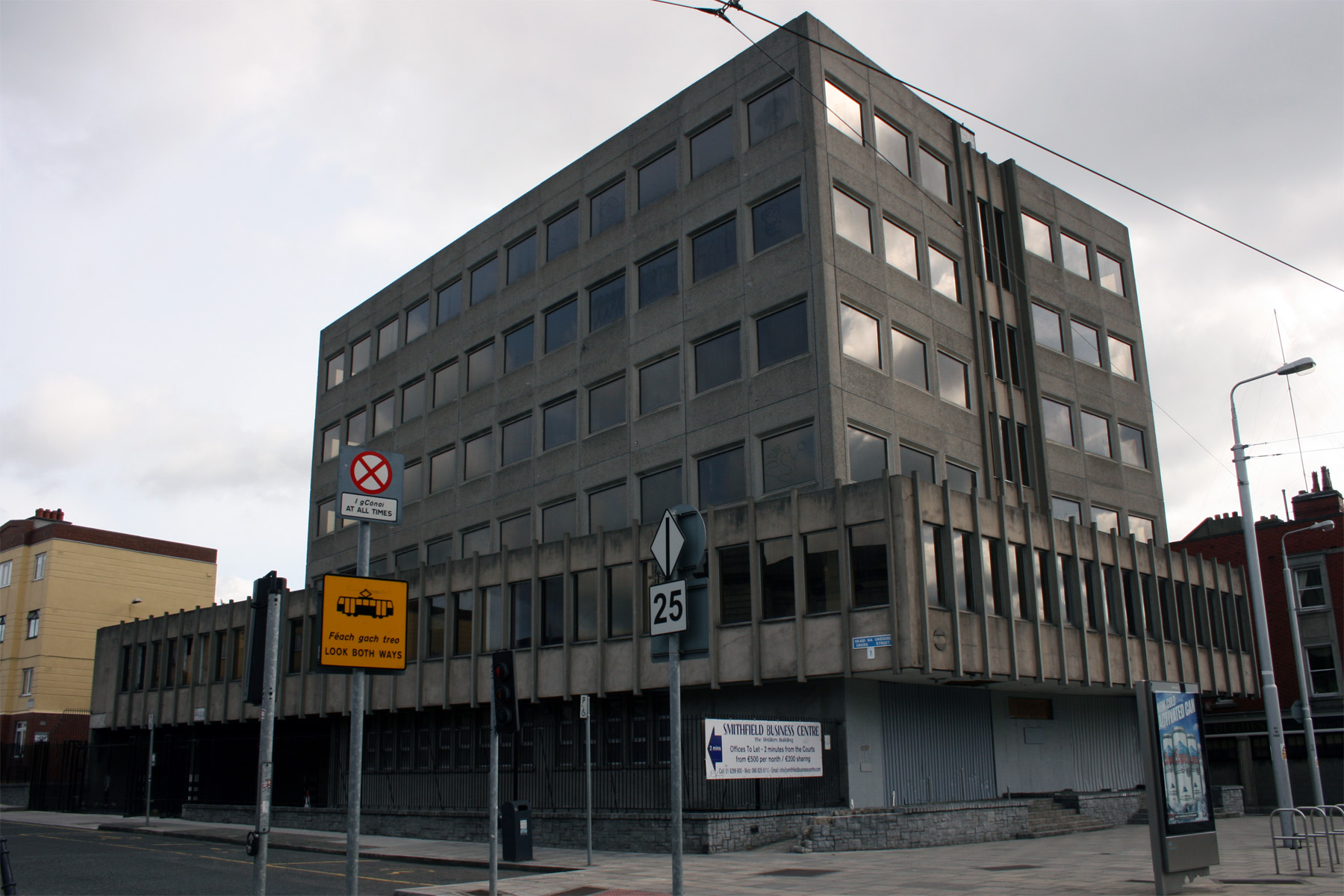
Dr Crayfish wrote: » I don't think the Central Bank is brutalist, maybe the old Motor Tax office is a good example. I wonder what they're doing with that building now?
Zaph wrote: » Busaras is one of the first buildings in Dublin I'd dynamite if I could. I think it's an absolute eyesore.
wakka12 wrote: » It will be around a long time to come due to its historical/architectural significance, its really quite an interesting building if you look beyond its somewhat unappealing facade
Candie wrote: » A rake of London tower blocks designed by Erno Goldfinger were given Grade 2 listing over the last few years. Not all tower blocks are equal and I'm quite fond of some as they represent an all but gone population of working-class Londoners living in the city. I absolutely hate Trellick Tower, regardless of it's status as a Brutalist masterpiece. Tiny one-beds on the lower floors go for around £400k, the floors with the views for much more. I suppose it's in W10, so it has that going for it. Wood Quay in Dublin is horrendous, the Central Bank is beautiful. It's hard to be absolute about any kind of architecture when context is so important.





![Photo of [Deleted User]](https://w5.vanillicon.com/v2/5c1c06444977305a5e99f4ce35119320.svg)



![Photo of [Deleted User]](https://wb.vanillicon.com/v2/bb1b435feca4d036f6db42bb67252c40.svg)


