![]() |
|
|
#1 |
|
Moderator
![]() |
Elephant bird
Came across this in a book I'm reading atm, anyone like to share their knowledge? I read it was up to 3m tall, is that the tallest bird ever (no pedantic dinosaurs were related to birds replies please!)? Anyone know of any good pics, etc? Thanks.
|
|
|
|
|
Advertisement
|
|
To remove these adverts, please create an account, or log in! You must have an account to post anyway :-) |
|
|
#2 | ||
|
Moderator
![]() Join Date: Sep 2006
Location: Hell's Creek
Posts: 15,314
|
Quote:
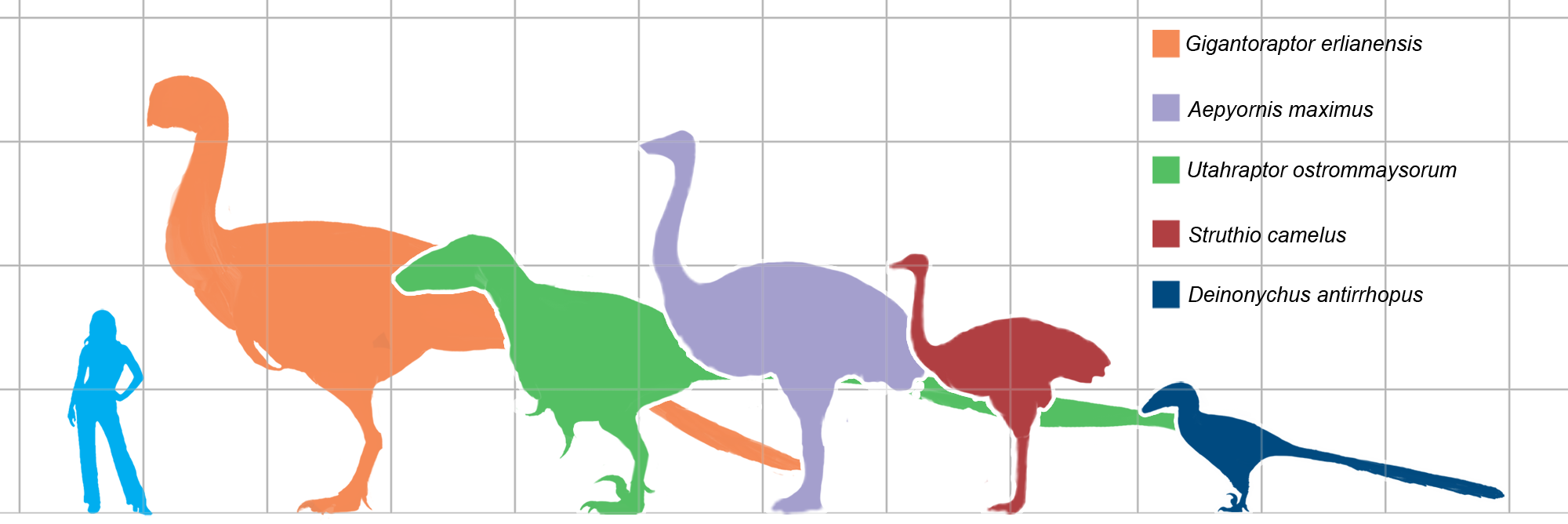
It's scientific name is Aepyornis and yes it was about 3 meters tall, weighing nearly half a tonne, making it arguably* the biggest (but not the tallest) bird known. I just had a read of the wikipedia page on the elephant bird and it's pretty up to date. Good place to start. http://en.wikipedia.org/wiki/Elephant_bird Check out the size-wise diagram: ![]() For the record, Struthio is the ostrich, while Gigantoraptor, Utahraptor and Deinonychus are dinosaurs. *Other contenders include: The tallest bird known is a type of moa called Dinornis which was over 3.5 meters tall (some 12 feet), weighing around 250kg. Although the moa is taller than the elephant bird, the elephant bird would have been considerably heavier. Here it is compared to Aptornis another giant bird from New Zealand : ![]() Bullockornis which was about 2.5 meters tall, weighing 250kg and lived in Australia some 15million years ago. It's closest relatives appear to be ducks. Debate persists whether it was a plant eater or a meat eater. It has a close relative called Dromornis which is known from very incomplete remains and may have reached 3 meters in height. If this size is correct it would probably outrank the elephant bird in size. However not enough remains are known to make an accurate judgment with many believing it to be the remains of a particularly large Bullockornis. The phorusrhacids, the legendary terror birds of South America could reach nearly 3 metres in height, weighing close to 150 kg. the most spectacular of their kind was the unusual North American Titanis (about 9 feet tall) which had re-evolved claws on it's arm like wings. The last of the terror birds are believed to have died off less than 100,000 years ago. ![]() Gastornis belonged to a similar (albeit more primitive) group of hunting birds. it could reach 6 feet tall and had a beak built like a hatchet (unlike the phorusrhacids which had eagle like hook style beaks). Gastornis and it's ilk lived in North America and Europe around 50 million years ago and were the first large land predator since the giant dinosaurs were wiped out 65MYA (aprox). ![]() Quote:
All replies are pedantic dino-bird replies!!!!
Last edited by Galvasean; 23-12-2009 at 22:37. |
||
|
|
|
| Thanks from: |
|
|
#3 |
|
Moderator
![]() |
Thanks for all the info dude, I knew you were just waiting for someone to ask you a question so you could show off.
the book is called ecology and imperialism, not exactly dino or paleo related, it was a short few lines about the mythical elephant bird that caused me to wonder (apparently people believed it was capable of catching an elephant in its claws and dropping it to the ground!). Did it only live on Madagascar? Were they still alive when Europeans discovered the island? And how long did they exist for? Thanks again. |
|
|
|
|
|
#4 | ||
|
Moderator
![]() Join Date: Sep 2006
Location: Hell's Creek
Posts: 15,314
|
Quote:
As far as we know they only lived in Madagasgar. However some egg remains once taught to belong to a close relative of the elephant bird were found on one of the Canary islands. It has been theorized that there may briefly have existed a land bridge that the birds could have walked across. More research into said eggs has suggested that they may have belonged to some form of unknown giant seabird. Quote:
The last elephant birds known from fossils survived to as recently as 1,000AD. However reports from European sailors suggest a few may have survived until as recently as 1469. Unfortunately these reports are very vague and could possibly refer to a large species of crowned eagle which lived on Madagascar at the time called Stephanoaetus or the reports may even have been confused with sightings of ostriches on the mainland of Africa. |
||
|
|
|
|
|
#5 |
|
Registered User
![]() Join Date: Mar 2008
Location: Meath
Posts: 786
|
Really informative posts, Galvasean, thanks!
|
|
|
|
|
|
#6 | ||
|
Moderator
![]() |
Quote:
Quote:
|
||
|
|
|
|
|
#7 | |
|
Moderator
![]() Join Date: Sep 2006
Location: Hell's Creek
Posts: 15,314
|
Quote:
The most recent theory (proposed by David Attenborough no less) attributes their downfall mostly to climate change, an increased drying of Madagascar and the loss of their usual forest habitat. The loss of forest land would have made good nesting sites harder to come by, leaving their eggs more vulnerable than usual. Add to this a probable slow rate of reproduction and the elephant bird was in trouble. |
|
|
|
|
| Thanks from: |
|
|
#9 | |
|
Moderator
![]() Join Date: Sep 2006
Location: Hell's Creek
Posts: 15,314
|
Quote:
![]() I have no idea where the following clip came from but it is all kinds of awesome: Last edited by Galvasean; 19-05-2009 at 00:39. |
|
|
|
|
| Thanks from: |
|
|
#10 |
|
Moderator
![]() Join Date: Sep 2006
Location: Hell's Creek
Posts: 15,314
|
Here is an interesting aricle on moa poo which reaveals surprising secrets:
http://www.sciencedaily.com/releases...0112110115.htm Also while browsing I found a nice piece on Haast's eagle (you'll like it, it's big): http://www.sciencedaily.com/releases...0111093910.htm
|
|
|
|
|
|
#11 |
|
Moderator
![]() |
Big birds are cool! Also, if the moa were so important to the propagation of those plants that are now threatened, shouldn't they have become extinct sooner? Perhaps there were other creatures that filled the void? Also, were there no marsupials or any other large non insect creatures in NZ before the Maori arrived?
|
|
|
|
|
|
#12 | ||
|
Moderator
![]() Join Date: Sep 2006
Location: Hell's Creek
Posts: 15,314
|
Quote:
Quote:
However, on the Australian mainland, Genyornis had to contend with Megalania prisca, the giant monitor lizard. ![]() Don't worry, the fight wasn't as one sided as that somewhat outdated (awesome as it is) picture depicts. Recent discoveries show that Genyornis had a large crushing beak and may have been a powerful predator in it's own right. Here is a more accurate restoration: ![]() Also, the Megalania wasn't quite as big as depicted, probably around one third the size. So if the two were drawn into a fight it could be quite epic. Last edited by Galvasean; 19-05-2009 at 00:41. |
||
|
|
|
| Thanks from: |
|
|
#13 |
|
Moderator
![]() |
I realise they only died out 1000 years ago or less, but generally if a plant depends on a specific creature to spread its seeds it dies out pretty quickly. Perhaps those types of plants have already died out and the ones that are dying now had a few other options. Also, that is an awesome picture. I want another of the eagle picking up a Moa that would be super awesome. Birds are great. So how big was the monitor lizard then?
|
|
|
|
|
|
#14 | ||
|
Moderator
![]() Join Date: Sep 2006
Location: Hell's Creek
Posts: 15,314
|
Quote:
Quote:
However, re-analysis of isolated vertabrae in 2004 suggested that some individuals may have exceeded 7meters in lenght, perhaps even larger than original estimates. |
||
|
|
|
![]() |
|
|
| Thread Tools | Search this Thread |
| Display Modes | |
|
|